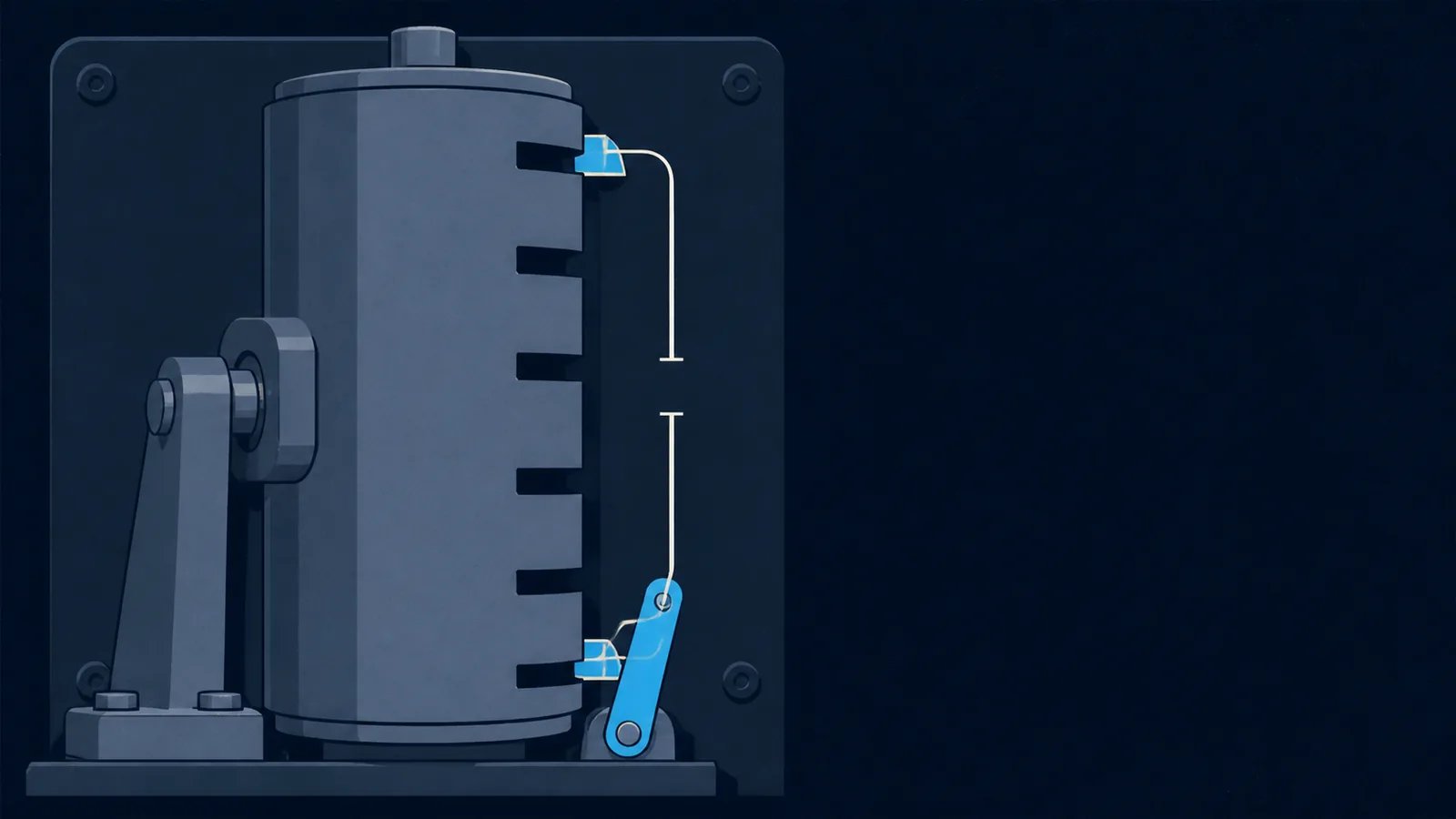
Do not change the balance, make the cost negative
Ask a beginner how to get past a check like if (cost > balance) reject(); and they will look for a way to change the balance. The interesting answer is to leave the balance alone and make the cost negative. Not by typing a minus sign, which the input validation catches, but by asking for a quantity so large that multiplying it by the price overflows the integer type and lands on a negative number. The check then passes honestly: a negative cost really is less than your balance. Subtracting it makes you richer.
That is the entire subject. Integers in C, in Java, in Solidity, and in the CPU itself are not the integers of mathematics. They are fixed-width bit patterns with hard edges, and arithmetic that crosses an edge does not error out or grow: it wraps, silently, and the result is a perfectly valid number that happens to be wrong. Every bug in this guide comes from code that was written as if the mathematical integers were what it had.
An integer bug is not a crash. It is a program computing the wrong answer with complete confidence and continuing to trust it.
This matters beyond the trick, because integer bugs are usually the first link in a chain rather than the payoff. An overflowed length becomes an undersized buffer, which becomes a heap overflow. A truncated size becomes a short allocation with a long copy. The memory corruption guides on this site (buffer overflow and heap exploitation) mostly begin at the point where a length is already wrong. This one is about how it got that way.
How the wrap works
A 32-bit signed integer holds 232distinct bit patterns. Two's complement assigns them to the range from -2147483648 to 2147483647 by treating the top bit as a sign. Add one to the largest value and the bit pattern rolls over into the one that means the most negative value. Nothing is detected; the carry out of the top bit is discarded.
2147483647 = 0111 1111 1111 1111 1111 1111 1111 1111+ 1-----------2147483648 = 1000 0000 0000 0000 0000 0000 0000 0000
Four boundaries are worth committing to memory, because they are the values you type:
| Type | Maximum | Minimum | The value that breaks things |
|---|---|---|---|
| int32_t | 2147483647 | -2147483648 | 2147483648 |
| uint32_t | 4294967295 | 0 | -1 becomes 4294967295 |
| int64_t | 9223372036854775807 | -9223372036854775808 | 9223372036854775808 |
| uint256 (Solidity) | 2**256 - 1 | 0 | 0 - 1 becomes 2**256 - 1 |
-O2: read the disassembly, not just the source.The four bug shapes
Every integer bug you will meet in a CTF fits one of these four. Learning to name the shape from the source is most of the solve, because each shape has exactly one input that triggers it.
| Shape | The code smell | The input that breaks it |
|---|---|---|
| Wrap-around | Arithmetic on user input before a comparison: price * qty | A value near the type maximum |
| Signedness confusion | A signed variable checked with <=, used as an unsigned size | -1 |
| Truncation | An int or size_t assigned into a short or char | 65536 + n, or 256 + n |
| No lower bound | An upper bound checked, a lower bound assumed: if (i < len) | Any negative number |
Shape 1: wrap-around arithmetic
The canonical form. The program computes something from your input, then validates the result. The validation is correct; the computation is not.
int total = price * quantity; // 32-bit multiply, wraps silentlyif (total > balance) {puts("Not enough coins");return;}balance -= total; // subtracting a negative ADDS
Pick a quantity whose product with the price exceeds INT_MAX. The product wraps negative, the check passes, and the subtraction credits your account. Solving for the quantity is one line:
PRICE = 900for qty in range(1, 10_000_000):total = (PRICE * qty) & 0xFFFFFFFFif total >= 2**31: # interpret as signedtotal -= 2**32if total < 0:print(qty, total)break
Flag Shop is this exactly: you start with 1100 coins, the real flag costs 100,000, and a multiplication on the purchase quantity wraps to a negative cost that the shop then subtracts. Two Sum strips the scenario away and asks for the mechanism directly: find two positive integers where n1 > n1 + n2. In mathematics no such pair exists. In 32-bit C, any pair whose sum crosses INT_MAX works.
Shape 2: signedness confusion
The most dangerous shape, because it is the one that turns into memory corruption. It happens when the same bit pattern is read as signed in one place and unsigned in another.
char buf[64];int len;scanf("%d", &len);if (len > 64) { // signed comparison: -1 > 64 is FALSE, so this passesputs("Too long");return;}read(0, buf, len); // read() takes size_t: -1 becomes 18446744073709551615
Send -1. The bounds check sees a small number and waves it through. The copy sees an enormous one and reads until the stack is destroyed. The check and the use disagree about what the bits mean, and nothing in C forces them to agree.
if (len > 64 || len < 0). That is correct, and its absence is what you are hunting for. When you read a bounds check in a decompiler, look at the jump instruction rather than the C: jg and jl are signed comparisons, ja and jb are unsigned. A jg guarding a value later passed to memcpy is the whole bug, visible in one opcode.Gatekeeper is a gentler version of the same type confusion, worth doing because it makes the idea concrete without memory corruption. It demands a three-character input whose numeric value exceeds 999. No decimal number satisfies both constraints. The resolution is that the conversion is strtol with base 16 hardcoded, so 3e8 is three characters wide and 1000 in value. The string length and the numeric value are two different readings of the same input, and the program never reconciles them.
Shape 3: truncation
Assigning a wide integer into a narrow one keeps the low bits and discards the rest. If a length is validated as a 32-bit value and then stored in a 16-bit field, everything above 65535 comes back around to a small number.
unsigned int requested = get_user_length(); // validated: must be < 100000unsigned short size = requested; // truncated to 16 bitschar *buf = malloc(size); // 65536 + 10 allocates 10 bytesmemcpy(buf, src, requested); // copies 65546. Heap overflow.
The signature of a truncation bug is two variables holding the same quantity at different widths: one used for the check, the other for the allocation or the copy. Whenever you see a size handled by more than one type, compute what happens at each type boundary.
| Assignment | Input | Value that survives |
|---|---|---|
| int to char | 256 | 0 |
| int to short | 65540 | 4 |
| long to int | 4294967300 | 4 |
Related and easy to confuse with truncation: byte order. If the value survives intact but arrives scrambled, you are looking at endianness rather than a size bug. Endianness and Endianness-v2 drill the distinction, which matters as soon as you start packing exploit payloads. See hex dumps for reading multi-byte values out of a dump correctly.
Shape 4: no lower bound
Not strictly an overflow, but it lives in the same family, and it shows up more often than any of the others in web and business-logic challenges. The code checks that a value is not too large and never considers that it might be negative.
if (index < item_count) {return items[index]; // index = -1 reads BEFORE the array}// Or, in application logic:// total = price * quantity, with quantity = -5, credits the account
Shop is the purest example: you hold 40 coins, the flag costs 100, and the shop lets you sell a negative quantity. Nothing overflows at all. The application validated the type (is this a number?) and never the range (is it positive?), and the arithmetic did the rest.
Finding them
With source, grep the arithmetic that touches user input. Without source, read the disassembly for the comparison and the width of the registers involved.
# Source review: arithmetic on input, and narrowing assignmentsgrep -nE '\*|\+|<<' src/*.c | grep -iE 'len|size|count|qty|price|index'grep -nE '(short|char|int)[ \t]+[a-z_]+ *= *[a-z_]+;' src/*.c# Binary: signed vs unsigned jumps guarding a sizeobjdump -d target | grep -E 'jg|jl|jge|jle' | head -40 # signedobjdump -d target | grep -E 'ja|jb|jae|jbe' | head -40 # unsigned# Compile the source with a sanitizer and let it tell yougcc -fsanitize=undefined -g chal.c -o chal && ./chal # signed overflow (it is UB)clang -fsanitize=integer -g chal.c -o chal && ./chal # also unsigned wrap and truncation
Two register-level tells are worth internalizing. Movement between register widths is truncation or extension made visible: mov eax, ecx zeroes the upper 32 bits of rax, movsx sign-extends (so 0xFF becomes -1), and movzx zero-extends (so 0xFF becomes 255). Seeing movsx on a length is a strong hint. If reading this level of detail is not yet comfortable, start with x86-64 assembly for CTF.
When the constraint is a system of arithmetic conditions rather than a single boundary, stop solving by hand and hand it to a solver. Z3 models fixed-width machine integers natively with its bitvector theory, which means it wraps exactly the way the target does:
from z3 import BitVec, Solver, satn1, n2 = BitVec('n1', 32), BitVec('n2', 32)s = Solver()s.add(n1 > 0, n2 > 0) # both positive, as the challenge demandss.add(n1 + n2 < n1) # yet their sum is smaller. Only true under wrappingprint(s.model() if s.check() == sat else 'no solution')
Beyond C: web, Python, Solidity
The rules change by language, and the changes decide whether the bug exists at all.
| Language | Integer behavior | What that means for you |
|---|---|---|
| C and C++ | Fixed width. Unsigned wraps by definition, signed overflow is undefined | Every shape applies. The richest target |
| Java | Fixed width, always signed, wrapping defined | Wrap-around and truncation apply. No unsigned confusion |
| Python | Arbitrary precision integers. They never overflow | Overflow only appears where Python touches fixed width: struct, ctypes, and explicit masking |
| JavaScript | Doubles. Integers are exact only to 253 | Precision loss rather than wrapping. Large IDs silently collide |
| Solidity 0.8 and later | Checked arithmetic. Overflow reverts, unless inside unchecked | Look for the unchecked block, or for a pragma below 0.8 |
The Solidity row deserves emphasis because it is where this bug class did the most real-world damage. Before version 0.8.0 all arithmetic wrapped silently with no revert, and a long series of token contracts were drained by exactly the code in shape 1. Smart Overflow reproduces it: a deposit function does unchecked uint256 arithmetic, and a deposit of 2256 - 1 wraps the tracked balance into something the contract treats as a fortune. Smart contract bugs covers the surrounding context.
The Python row is why so many CTF services written in Python are not vulnerable to this at all: 2**64 is just a number there. When a Python challenge does have an integer bug, look for the seam where it packs into fixed width, which is almost always struct.pack or an explicit & 0xFFFFFFFF. Shop is a Python target and its bug is shape 4, the missing lower bound, precisely because shape 1 was unavailable.
And the payoff case: when an integer bug produces a wrong size rather than a wrong price, it becomes a memory corruption primitive. Pizza Router chains an out-of-bounds access into heap exploitation, which is the usual endgame for shapes 2 and 3. Pick that thread up in heap exploitation.
picoCTF challenges
| Challenge | Shape | Difficulty |
|---|---|---|
| Two Sum | Wrap-around, isolated. Two positives whose sum is smaller than either | Medium |
| Flag Shop | Wrap-around on a purchase total, turning a cost into a credit | Medium |
| Shop | No lower bound. A negative quantity, no overflow required | Medium |
| Gatekeeper | Type confusion. Length and numeric value read from the same input | Medium |
| Smart Overflow | Unchecked uint256 arithmetic in a contract | Medium |
| Endianness | Byte order, the thing truncation is most often confused with | Easy |
| Endianness-v2 | The same idea applied to a file rather than a prompt | Medium |
| Pizza Router | Out-of-bounds access chained into heap exploitation | Hard |
Quick reference
# The values to try first, in order-1 # unsigned max, and the classic signedness probe0 # division, modulo, and empty-allocation paths2147483647 # INT_MAX2147483648 # INT_MAX + 1: wraps to INT_MIN4294967295 # UINT_MAX65536 # 16-bit truncation boundary256 # 8-bit truncation boundary# Simulate the target's arithmetic in Pythonpython3 -c "v=(900*2500000)&0xFFFFFFFF;print(v-2**32 if v>=2**31 else v)"# Signed vs unsigned jumps in a disassembly# jg jl jge jle -> signed# ja jb jae jbe -> unsigned# Let the compiler find itgcc -fsanitize=undefined -g chal.c -o chal # signed overflow onlyclang -fsanitize=integer -g chal.c -o chal # unsigned wrap and truncation too
Where this leads:
- Buffer overflow and heap exploitation for what a wrong length becomes.
- Z3 for solving the constraints automatically.
- Smart contract bugs for the Solidity side.
- The pwn roadmap for where this sits in the larger path.
Sources and further reading
The specifications that decide whether a given wrap is defined, undefined, or impossible.
- CWE-190 and CWE-195 for the canonical descriptions of wraparound and signed-to-unsigned conversion errors.
- The C11 draft standard (N1570) for the asymmetry that matters most here: unsigned arithmetic is defined to wrap modulo 2 to the N, while signed overflow is undefined behavior a compiler may optimize around.
- UndefinedBehaviorSanitizer for finding these automatically when you have the source.
- Solidity 0.8.0 breaking changes for the switch to checked arithmetic and the
uncheckedescape hatch, and strtol(3) for the base handling behind the type-confusion example.